
Six months of a Canada–India life, in one ledger
A CAD salary, a USD freelance income, an Indian salary that stays in India, three remittances home, and a rupee SIP that goes out on the 28th whatever else happens. Flip the Currency Lens below. Every figure on this page is recomputed at each transaction's own exchange rate — not one average rate for the period — and the totals reconcile to the cent in every direction.
The sample ledger didn't load. It is a static file, so a refresh usually fixes it — or read it directly.
Transactions
Cross-border moves are flagged rather than filed as expenses. Indian statement codes — TDS, WTAX, SIP, DIV — are read directly instead of landing in "uncategorized". The right-hand column keeps the original amount and the rate captured on that date.
Transfer inbox
Each remittance is one event with two legs — money leaving in CAD and arriving in INR days later — paired so it never double-counts as both a transfer and a payment. The cost line is the gap between the mid-market rate on the arrival date and the rate actually received. That number only exists between two currencies, which is why a single-currency budget cannot show it.
Ask Orbiq
Pick a question. The answers here were computed from this ledger ahead of time and checked in with it — no model runs on this page. That is deliberate: an unauthenticated text box wired to a paid inference API is an abuse vector, and a live model could state a figure this ledger does not contain. In the real app the assistant reads your question as you typed it plus totals computed from your own data.
The shareable version
Roasts get screenshotted. Cropping a real dashboard by hand puts whatever else was on screen into a public thread, so the card is a first-class output instead: it is built from an allowlist — category shares, the roast, the month — and cannot carry a merchant name, an account, an exact date or a balance. Amounts show as shares unless you deliberately turn absolute figures on.
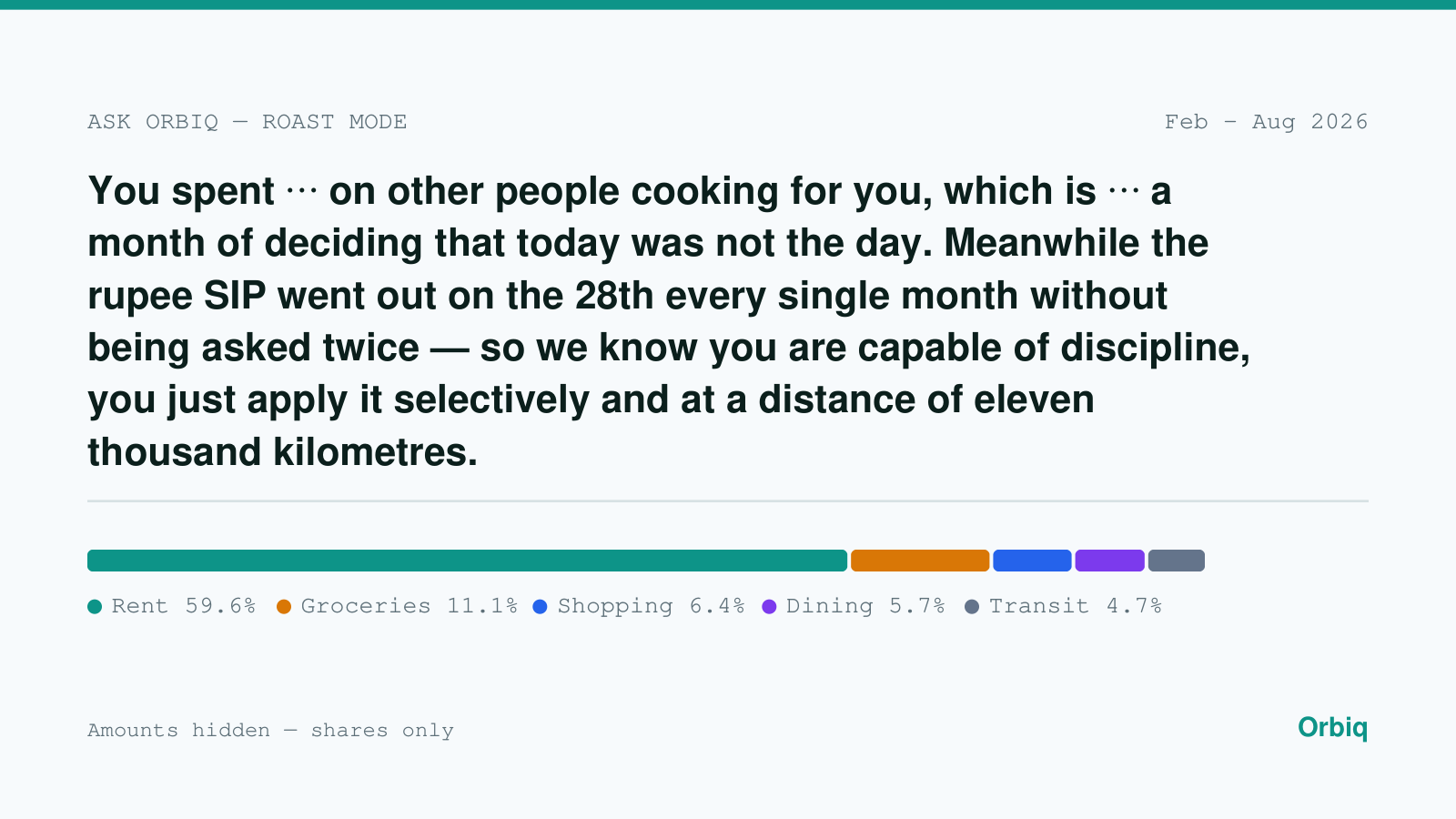
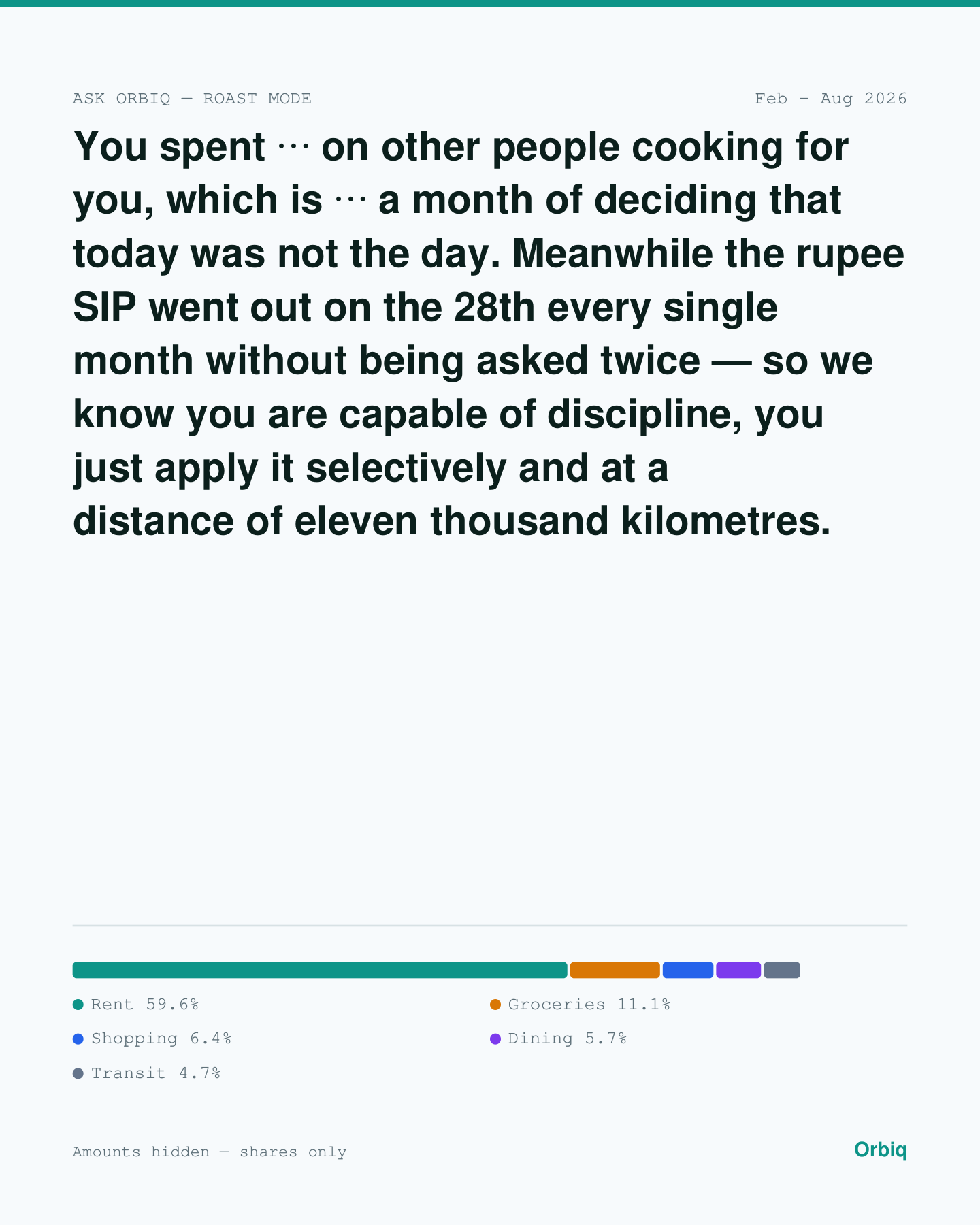
What you are looking at
— invented transactions across four accounts in three currencies, spanning 16 February to 15 August 2026. The file behind this page is public and readable, and it is generated from a fixed seed by a script in the repository, so every number here can be checked rather than taken on trust. Orbiq does not track live stock or fund prices, so you will not find a "portfolio value" or an unrealised gain anywhere on this page — only money that actually moved.